
Logo

3D Laser Scanning Survey Services for Construction & BIM - Avoid Rework. Build Smarter.

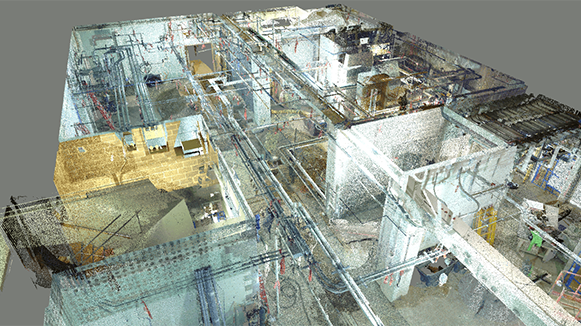
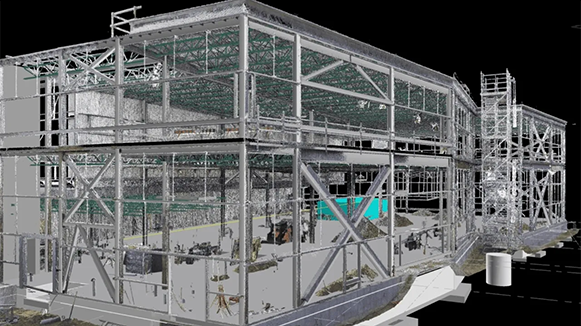
At AJ Digital, we provide cutting-edge 3D laser scanning services that deliver precise, reliable data for your construction and engineering projects. Our digital laser scanning technology captures millions of data points to create accurate point clouds, forming the foundation for informed decision-making throughout your project lifecycle.

Get in touch today for a free consultation


The AJ Digital advantage: How laser scanning optimises your project

AJ Digital takes this raw point cloud data and refines it, transforming it into a truly valuable tool. We apply real-world coordinates, ensuring perfect alignment with your existing plans to enable seamless integration with other digital platforms used in construction and facility management. Our laser scanning services are designed to empower our clients at every stage of the entire building lifecycle. This is how we deliver that technology.

Base design discrepancy review

Laser scanning enables clarity on the early stages of each project, allowing us to identify any potential deviations or clashes in the base design. This proactive approach empowers our clients to address these issues before work begins, preventing costly delays and rework.

Get in touch today for a free consultation

As-Built discrepancy review

Traditionally, as-built drawings are created after construction is complete. However, these drawings may not always capture every modification made on-site. Laser scanning provides a complete and verifiable record of the building’s "as-built" state. We compare this digital record with the original design and identify any discrepancies. This meticulous review helps clients to finalise accurate as-built documentation, ensuring a smooth handover process and avoiding potential disputes.

Get in touch today for a free consultation

Scan to BIM services

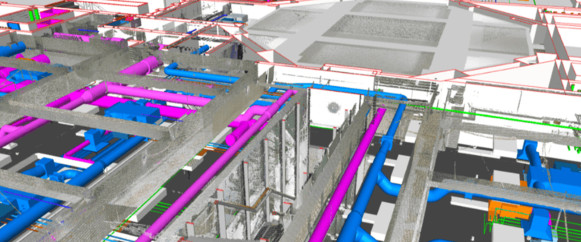
Once our 3D laser scanning captures a comprehensive point cloud, the next step in our process is Scan to BIM (Building Information Modelling). This involves converting the point cloud data obtained through digital laser scanning into a detailed 3D model using industry-leading software like Autodesk Revit. This model serves as a central hub of information, seamlessly integrating architectural, structural, and MEP (mechanical, electrical, and plumbing) elements.

The Scan to BIM model can then be used throughout the project lifecycle – from design and planning to construction and ongoing maintenance. It facilitates clash detection, enables better communication between stakeholders, and supports efficient decision-making.

At AJ Digital, we tailor our Scan to BIM services to your specific needs. Whether you require a basic architectural model or a highly detailed Level of Detail (LOD) 500 model, we can deliver accurate and reliable results.

The broader benefits of laser scanning

While discrepancy review is a core benefit, laser scanning offers many additional advantages:

Improve Design Accuracy

Laser scans provide a detailed and measurable understanding of existing conditions, enabling architects and engineers to create more accurate and efficient designs.

Smarter facility management

A digital twin of each building facilitates efficient space planning, maintenance scheduling and asset tracking.

Fewer site visits

Laser scans allow for remote collaboration and decision-making, minimising the need for frequent physical site visits.

Enhanced Safety Planning

By providing a clear understanding of existing conditions, laser scanning helps to identify potential safety hazards before construction begins.

Why Choose AJ Digital for Your Laser Scanning Needs?

With years of experience in 3D laser scanning survey projects, we understand the unique challenges of construction and engineering environments. Our team combines technical expertise with practical industry knowledge to deliver:

Experienced professionals: Our team comprises highly skilled technicians who are passionate about accuracy and efficiency.
Cutting-edge technology: We use the latest laser scanning equipment to ensure the highest possible data quality.
Bespoke solutions: We understand that every project is unique. We tailor our laser scanning services to meet each specific need and objective.
Seamless integration: Our point cloud data is compatible with leading industry software, allowing for smooth integration with all existing workflows.

  • How does 3D laser scanning work?

    3D laser scanning uses LiDAR (Light Detection and Ranging) technology to emit millions of laser pulses that measure precise distances to surfaces. The scanner captures these reflected laser beams to create accurate point cloud data, which forms a detailed digital representation of the physical environment. At AJ Digital, we use this technology to capture comprehensive spatial data for construction projects, renovation planning, and as-built documentation.

  • When do you need 3D laser scanning? 

    You need 3D laser scanning when working with existing buildings for renovations, conducting as-built surveys for construction projects, documenting heritage sites, performing clash detection between design and reality, or when traditional surveying methods are insufficient for capturing complex geometries. It's particularly valuable for retrofit projects, BIM model creation, and situations requiring millimetre-level accuracy.

  • What are some key applications of laser scanning? 

    Key applications include scan-to-BIM conversion for building information modelling, as-built documentation for existing structures, construction progress monitoring, clash detection and coordination, facility management support, heritage preservation, and quality assurance during construction phases. Laser scanning is also essential for complex MEP system documentation and structural analysis.

  • What are the benefits of 3D laser scanning? 

    The benefits include exceptional accuracy (often within millimetres), rapid data capture that's up to 10 times faster than traditional surveying methods, enhanced safety by reducing manual measurement in hazardous areas, comprehensive data collection that captures every detail, non-contact measurement that won't damage sensitive surfaces, and the ability to create detailed 3D models for better project visualisation and coordination.

  • What’s the difference between 3D laser scanning and traditional surveying? 

    Traditional surveying focuses on measuring specific points and distances for mapping and boundary establishment, while 3D laser scanning captures millions of data points to create comprehensive digital representations of entire structures or environments. Laser scanning is faster, more detailed, and provides data suitable for BIM modelling, whereas traditional surveying is better suited for legal boundaries, property division, and specific coordinate measurements.

Top