
Logo

Seamless collaboration with 3D Design Coordination

A range of different teams – architects, engineers, contractors – all play crucial roles in bringing a project to life. Traditionally, this collaboration relied on 2D drawings, a method prone to miscommunication and unforeseen clashes during construction.

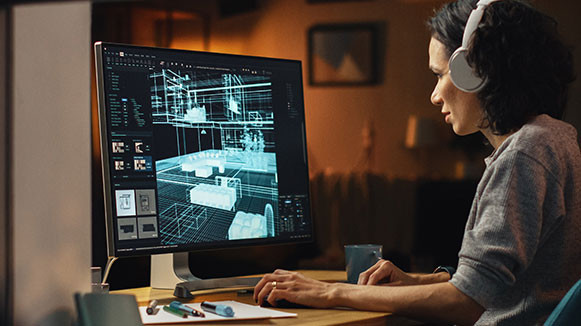
That has all changed with 3D design coordination, which has transformed design and construction. Detailed digital representations provide a far more comprehensive understanding of a project than traditional 2D drawings. However, the true power of 3D modelling lies in its ability to facilitate collaboration.

Get in touch today for a free consultation


Avoiding clashes before they arise

At AJ Digital, we understand that preventing problems is far more efficient than fixing them later. That’s why our 3D design coordination services focus on two key aspects:

Clash Avoidance

Is a design process where clashes between different building elements are identified and addressed before construction even begins. Clash avoidance involves creating each design element within the context of the entire project, ensuring everything fits together seamlessly. This proactive approach minimises the need for costly rework on-site, saving time and money.

Clash Detection

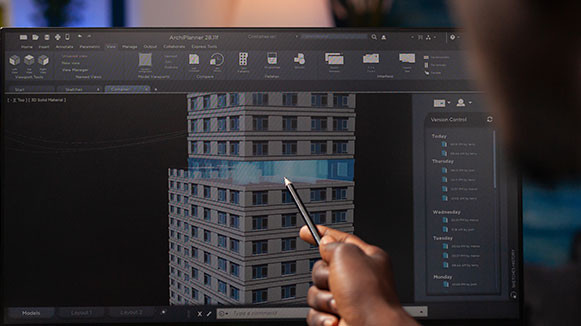
Despite the best efforts, unforeseen clashes can still occur. AJ Digital employs sophisticated software to analyse 3D models for any potential conflicts. Our team meticulously sorts through these results, prioritising critical issues and ensuring they are addressed promptly.

Bespoke solutions

We recognise that every project is unique, which is why AJ Digital’s 3D design coordination services are not a one-size-fits-all solution. We take the time to understand each project’s specific design and construction schedule. This allows us to:

Prioritise issues: We prioritise clash detection based on each project schedule, ensuring critical issues are identified and addressed.

Streamlined communication: Our approach ensures coordinated information, flows smoothly to the construction site, minimising delays and rework.

Bespoke processes: While we offer a proven “out of the box” process for quick implementation, we can also tailor our services to integrate seamlessly with any client’s existing workflows.

Interactive dashboards

Effective communication is key to successful project completion. AJ Digital goes beyond simple clash reports by providing interactive dashboards that offer real-time insights into the design coordination progress. These dashboards allow clients to:

Visualise performance: By tracking key metrics to gain a clear understanding of how each project is performing in terms of design coordination.

Identify bottlenecks: We quickly identify areas requiring additional focus, allowing for proactive problem-solving and improved project efficiency.

Get in touch today for a free consultation

Full Issue Reporting

Transparency is crucial for successful collaboration, which is why AJ Digital provides comprehensive issue reports at every stage of the design coordination process. These detailed reports include:

Document all clashes: Which maintains a clear record of all identified clashes, ensuring nothing gets overlooked.

Facilitate resolution: Which provides a clear roadmap for addressing each identified clash, streamlining communication and accelerating problem-solving.

Stage completion verification: Detailed reports serve as a valuable record for stage completion, ensuring all design elements are coordinated before moving to the next phase of the project.

The benefits of 3D design coordination

By partnering with AJ Digital for all 3D design coordination needs, our clients unlock a wide range of benefits such as:

Reduced rework

Early identification and resolution of clashes minimises costly rework on-site, saving time and money.

Improved project efficiency

Streamlined communication and a focus on proactive problem-solving ensures each project stays on track and meets deadlines.

Enhanced quality

A coordinated design minimises the risk of errors, leading to a higher quality finished product.

Reduced risk

Early identification of potential issues mitigates project risks and unforeseen delays.

Improved communication

Interactive dashboards and comprehensive reports foster transparency and collaboration between all project stakeholders.

  • What are the key components of 3D design coordination?

    Key components include BIM model integration from multiple disciplines (architectural, structural, MEP), clash detection and resolution between different building systems, design review meetings with all stakeholders, model-based collaboration workflows, construction sequencing planning, and documentation of coordination decisions. The process ensures all building systems work together seamlessly before construction begins. 

  • What are the benefits of 3D design coordination?

    Benefits include significant reduction in construction conflicts and delays, improved communication between architects, engineers, and contractors, faster problem resolution through visual 3D analysis, reduced project timelines by solving issues before construction, lower construction costs through better planning, and enhanced project quality with coordinated building systems that perform as intended. 

  • What is some common software used for 3D design coordination?

    Common software includes Autodesk Navisworks for clash detection and model review, Autodesk Revit for BIM modelling and coordination, BIMcollab for cloud-based collaboration, BIM 360 (now Autodesk Construction Cloud) for project coordination, Solibri for model checking and quality assurance, and various MEP-specific software like AutoCAD MEP and Bentley MicroStation for specialised coordination tasks. 

  • How early should 3D design coordination begin?

    3D design coordination should begin as early as possible in the design phase, ideally during RIBA Stage 3 design development. Starting coordination early allows teams to identify and resolve potential conflicts before they become expensive construction problems. The coordination process typically needs to maintain a 6-8 week lead time ahead of construction activities to ensure operational teams have coordinated drawings for fabrication and installation. 

  • What types of clashes can 3D design coordination detect?

    3D design coordination can detect hard clashes (physical conflicts where building elements occupy the same space), soft clashes (clearance violations where elements are too close together), workflow clashes (scheduling conflicts where trades interfere with each other), and 4D clashes (time-based conflicts in construction sequencing). This comprehensive clash detection prevents costly field conflicts and ensures smooth construction workflows. 

Top