
Logo

Architectural BIM Modelling Services - Create Intelligent Building Designs

Accurate architectural BIM models form the foundation of successful construction projects, providing the detailed digital representation that all other disciplines coordinate around. AJ Digital's architectural BIM modelling services deliver precise, intelligent Revit models of building fabric and architectural elements that support confident design decisions and clash-free coordination.

Get in touch today for a free consultation


Building the digital foundation: Our architectural BIM modelling approach

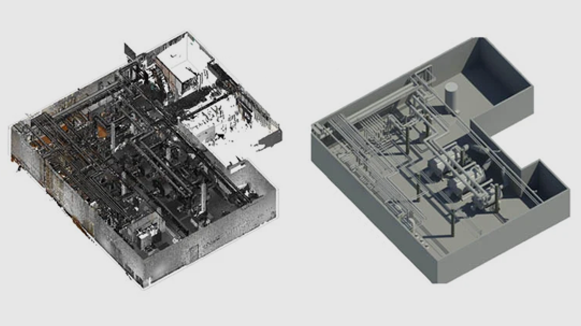
Every successful construction project starts with a well-coordinated architectural model that accurately represents the building's form, fabric, and spatial relationships. As part of our comprehensive 3D modelling services, AJ Digital creates detailed architectural BIM models that go beyond simple geometry, incorporating intelligent data about materials, specifications, and performance characteristics.

Our BIM architectural modelling services provide the reliable foundation that structural engineers, MEP contractors, and quantity surveyors need to deliver their work with confidence, reducing coordination issues and supporting seamless project delivery.

What is architectural BIM modelling?

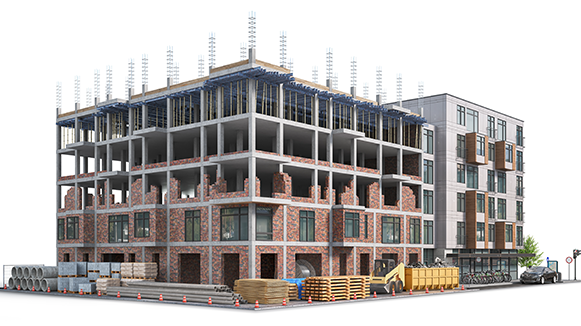
Architectural BIM modelling is the process of creating detailed, intelligent 3D representations of a building's architectural elements using Autodesk Revit. These models include all building fabric components such as walls, floors, roofs, doors, windows, stairs, and finishes, each containing data about materials, dimensions, fire ratings, thermal properties, and other crucial specifications. 

Unlike traditional 2D architectural drawings, a BIM model architecture provides a single, coordinated source of truth that supports design development, clash detection, quantity take-offs, and construction planning throughout the project lifecycle.

Why architectural BIM modelling matters

Design coordination failures and incomplete information are leading causes of construction delays and cost overruns. Our Revit architecture services eliminate these risks by creating comprehensive architectural models that clearly define every element of the building fabric before construction begins.

This means structural engineers can design with confidence knowing exact floor-to-floor heights and loading requirements, MEP contractors can coordinate services within accurate ceiling voids and risers, and contractors can plan construction sequences with reliable spatial information.

Our architectural BIM modelling process

We work collaboratively with your design team to create detailed Revit models based on architectural drawings, design intent, and project specifications. Our experienced architectural BIM modellers develop models that accurately represent all building elements including external walls with correct build-ups and materials, internal partitions with finishes and fire ratings, floor and roof structures with appropriate detailing, and all doors, windows, and architectural features with manufacturer specifications and performance data.

Throughout development, we maintain coordination with structural and MEP disciplines, ensuring the architectural model provides accurate spatial envelopes and coordination zones. 

The key benefits of architectural BIM modelling

Enhanced design coordination

A single, accurate architectural model becomes the reference for all disciplines, enabling structural engineers and MEP contractors to coordinate their designs with confidence.

Accurate quantity information

Intelligent models containing material and specification data support reliable cost estimates and procurement planning throughout the project lifecycle.

Improved construction planning

Detailed architectural information supports accurate construction sequencing, logistics planning, and on-site coordination, reducing delays and improving efficiency.

Why choose AJ Digital for architectural BIM modelling?

Our team of skilled architectural BIM modellers combines technical Revit expertise with practical understanding of construction and design coordination. We create models that truly serve the project, not just satisfy software requirements, delivering architectural BIM modelling services that support the entire construction team from concept through to handover.

Design-focused modelling: We understand architectural intent and design principles, creating models that accurately represent your vision while remaining constructible.

Multi-stage delivery: From early concept models for planning applications to detailed construction models for contractors, we deliver the right level of information at each project stage.

Coordination expertise: Our architectural models are built with other disciplines in mind, providing clear coordination zones and spatial envelopes for structural and MEP integration.

Quality-assured deliverables: Rigorous checking processes ensure every model meets dimensional accuracy standards, contains complete data, and complies with UK BIM requirements.

  • What is the difference between architectural BIM modelling and CAD?

    CAD produces 2D drawings and basic 3D geometry, but the lines and shapes contain no intelligence, they simply represent what something looks like. An architectural BIM model is made up of intelligent objects, such as walls, floors, doors, and windows, each containing data about materials, dimensions, fire ratings, thermal properties, and other specifications. This means the model can be used not just for design visualisation, but also for quantity take-offs, clash detection, energy analysis, and construction planning, all from a single coordinated source of information.

  • Why is the architectural model considered the foundation of a BIM project?

    On a BIM project, the architectural model defines the building's form, spatial arrangement, and fabric, the fixed framework within which all other disciplines must work. Structural engineers design around it, MEP contractors route their services within the ceiling voids and risers it defines, and quantity surveyors extract material quantities from it. If the architectural model is inaccurate or incomplete, every downstream discipline is affected. A well-built architectural BIM model reduces coordination failures and gives the whole project team a reliable reference from the very start.

  • What information is contained within an architectural BIM model?

    Beyond basic geometry, an architectural BIM model contains data about every element of the building fabric. This includes wall build-ups with material layers and U-values, floor and roof constructions with structural depths, door and window schedules with manufacturer specifications and performance ratings, and room data including areas, finishes, and acoustic or fire compartmentation requirements. This embedded data is what makes a BIM model significantly more useful than a traditional drawing set for construction, cost planning, and facilities management.

  • At what stage of a project should architectural BIM modelling begin?

    Architectural BIM modelling can begin as early as the concept or feasibility stage, where simpler massing models support planning applications and early design decisions. As the project develops through RIBA stages, the model is progressively enriched with more detail and data, culminating in a construction-ready model that contractors and subcontractors can coordinate from. Starting early maximises the value of BIM, as decisions made at the design stage are far cheaper to change than those made during construction.

  • Is architectural BIM modelling required on UK construction projects?

    BIM Level 2 has been a requirement on centrally procured UK government projects since 2016, and the expectation of BIM delivery is increasingly widespread across both public and private sector schemes. Many clients, main contractors, and developers now include BIM requirements in their project briefs as standard. Architectural BIM models produced in the UK are typically expected to comply with the BS EN ISO 19650 series of standards, which govern how project information is managed and exchanged throughout the building lifecycle.

Top